Permission to Use Sigma Logo
If you are an Sigma member, go to
The Circle to download the chapter style guide and a JPEG file of the Sigma logo. If you would like a vector image of the logo or crest,
complete this form and your request will be reviewed as soon as possible.
If you are not an Sigma member and would like to request use of Sigma's official logo, contact
marketing@sigmanursing.org. In your email, provide detailed information regarding your intended use. Permission to use the logo or crest is granted on a case-by-case basis, and reasonable notice should be given. Approvals are for one-time use only.
Sigma is submitting a public comment to the U.S. Department of Education in response to a proposed rule that continues to exclude nursing from the definition of “professional degree” programs. In our letter, we urge the Department to explicitly include post-baccalaureate nursing degrees (MSN, DNP, PhD), emphasizing that graduate nursing education meets the standards of advanced professional preparation and is essential to strengthening the healthcare workforce and expanding access to care for all.
We encourage you to read Sigma’s full comment below to learn more about why this issue matters for nurses, educators, and the communities we serve.
Docket ID: ED-2025-OPE-0944
Department of Education
27 February 2026
Dear Members of the U.S. Department of Education:
On behalf of Sigma Theta Tau International Honor Society of Nursing (Sigma), representing more than 100,000 nurse leaders, scholars, and practitioners throughout over 100 countries, we respectfully submit this public comment on the Notice of Proposed
Rulemaking released January 29, 2026. We are deeply concerned that the proposed rule continues to exclude nursing from the regulatory definition of “professional degree” programs, and we encourage the Department to reconsider this position
before finalizing the rule.
Our Request
Sigma urges the Department of Education to explicitly include post-baccalaureate nursing programs, as outlined under the “Health Professions and Related Clinical Sciences” series of Classification of Instructional Programs (CIP) codes (Series 51.38), in the proposed regulatory definition of professional degree programs, and all the degrees at the master’s and doctoral level they represent.
Specifically, we urge the inclusion of post-baccalaureate nursing degrees (MSN, DNP, Ph.D.) in the list of professional degrees by revising the proposed language to read:
“A professional degree may be awarded in the following fields: (i) Pharmacy (Pharm.D.), Dentistry (D.D.S. or D.M.D.), Veterinary Medicine (D.V.M.), Chiropractic (D.C. or D.C.M.), Law (L.L.B. or J.D.), Medicine (M.D.), Optometry (O.D.), Osteopathic
Medicine (D.O.), Podiatry (D.P.M., D.P., or Pod.D.), Theology (M.Div. or M.H.L.), Clinical Psychology (Psy.D. or Ph.D.), and Nursing (MSN, DNP, Ph.D.).”
This revision aligns regulatory language with the reality of modern healthcare education and practice.
Why Nursing Qualifies as a Professional Degree
Graduate nursing education prepares practitioners and scholars to advance health through a distinct professional pathway spanning both clinical practice and academic leadership.
Advanced practice registered nurses (APRNs) complete rigorous post-baccalaureate education that integrates advanced scientific knowledge, extensive clinical training, and independent decision-making, followed by national certification and state licensure.
In many states, they practice with full authority, often serving as primary providers in their communities. These areas of practice may be in rural and frontier areas where there is no other access to healthcare.
Graduate-prepared academic nurses, including those with research and terminal practice doctorates, educate future clinicians, generate evidence to improve care, and sustain the nursing workforce. Excluding nursing from the professional degree category
would restrict access, reduce enrollment, and limit faculty development, ultimately weakening nursing programs and decreasing the overall workforce capacity amid growing demand.
Together, all of these pathways reflect the defining characteristics of a professional degree: advanced specialized education, standardized preparation, and significant responsibility for advancing practice, education, and population health outcomes.
Nursing as a Licensed Profession
Characterizing nursing as supervised practice misrepresents how nursing functions. Nursing is a licensed, regulated profession grounded in accountability, ethical standards, and public trust.
Registered nurses practice within state-defined scopes of practice and are independently accountable for their professional judgment. At the advanced practice level, these nurses deliver care autonomously in accordance with state regulatory frameworks,
including those where advanced practice nurses have full practice authority.
For 24 consecutive years, Gallup has named nurses America’s most trusted profession, reflecting public confidence in nursing expertise,
ethical standards, and professional judgment. The exclusion of nursing as a professional degree does not reflect this longstanding recognition of professional responsibility and independent practice. It also conflicts with other federal initiatives,
such as the Centers for Medicare & Medicaid Services Rural Transformation Grants, which specifically invest in expanding access to advanced practice nurses in underserved communities.
The Impact of Exclusion on Healthcare Access
More than 85 million Americans live in federally designated Health Professional Shortage Areas,
where advanced practice nurses often serve as essential primary care providers—particularly in rural, frontier, and underserved communities. Excluding nursing from the professional degree category would create barriers to graduate education
at a time of workforce strain, limit the supply of these critical providers, and create new levels of health professional shortages across the country.
Additionally, a reduction in graduate-prepared academic nurses who educate and train these APRNs would further constrain the workforce pipeline and weaken healthcare capacity.
Conclusion
The Department has received substantial feedback on this issue. Nearly 250,000 nurses and allies have voiced unified concern.
Sigma respectfully urges the Department to reconsider this exclusion and include nursing in the professional degree definition as specified above. Graduate nursing programs meet the criteria for professional degree classification through rigorous
education and indispensable contributions to healthcare delivery.
We welcome the opportunity to provide additional information and partner with the Department to deepen understanding of advanced nursing education and practice.
Thank you for your consideration and commitment to policies supporting healthcare workforce development.
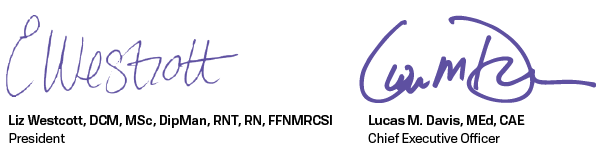
Respectfully submitted,
Sigma Theta Tau International Honor Society of Nursing
550 W. North St., Suite 120, Indianapolis, IN 46202
Take action: Add your voice by submitting a comment to the Department of Education.